
Candlestick chart analysis serves as the foundation for successful intraday trading, providing traders with visual representations of market psychology and price movements. These candlestick patterns intraday trading techniques originated in 18th century Japan and have become essential tools for modern day traders seeking profitable opportunities.
Understanding candlestick chart analysis enables traders to decode market sentiment through simple visual patterns that reveal the battle between buyers and sellers. Professional traders rely on candlestick patterns intraday trading because these formations provide clear entry and exit signals based on actual price action rather than lagging indicators.
Fundamentals of Candlestick Chart Reading
Basic Candlestick Structure
Every candlestick chart analysis begins with understanding the four essential price points: open, high, low, and close prices. These elements create the candlestick body and shadows that form the basis of all candlestick patterns intraday trading strategies.
The body represents the range between opening and closing prices, while the upper and lower shadows show the highest and lowest prices reached during that time period. Green or white candles indicate bullish sessions where closing prices exceeded opening prices, while red or black candles represent bearish sessions.
Time Frame Selection for Candlestick Analysis
Successful candlestick chart analysis requires appropriate time frame selection for intraday trading purposes. Professional traders typically use 5-minute to 15-minute charts for candlestick patterns intraday trading to capture quick price movements and react swiftly to market changes.
However, candlestick chart analysis on 1-hour and 4-hour time frames provides better balance between market structure visibility and trade setup identification. These longer time frames reduce market noise while maintaining the effectiveness of candlestick patterns intraday trading strategies.
Single Candlestick Reversal Patterns
The Hammer Pattern
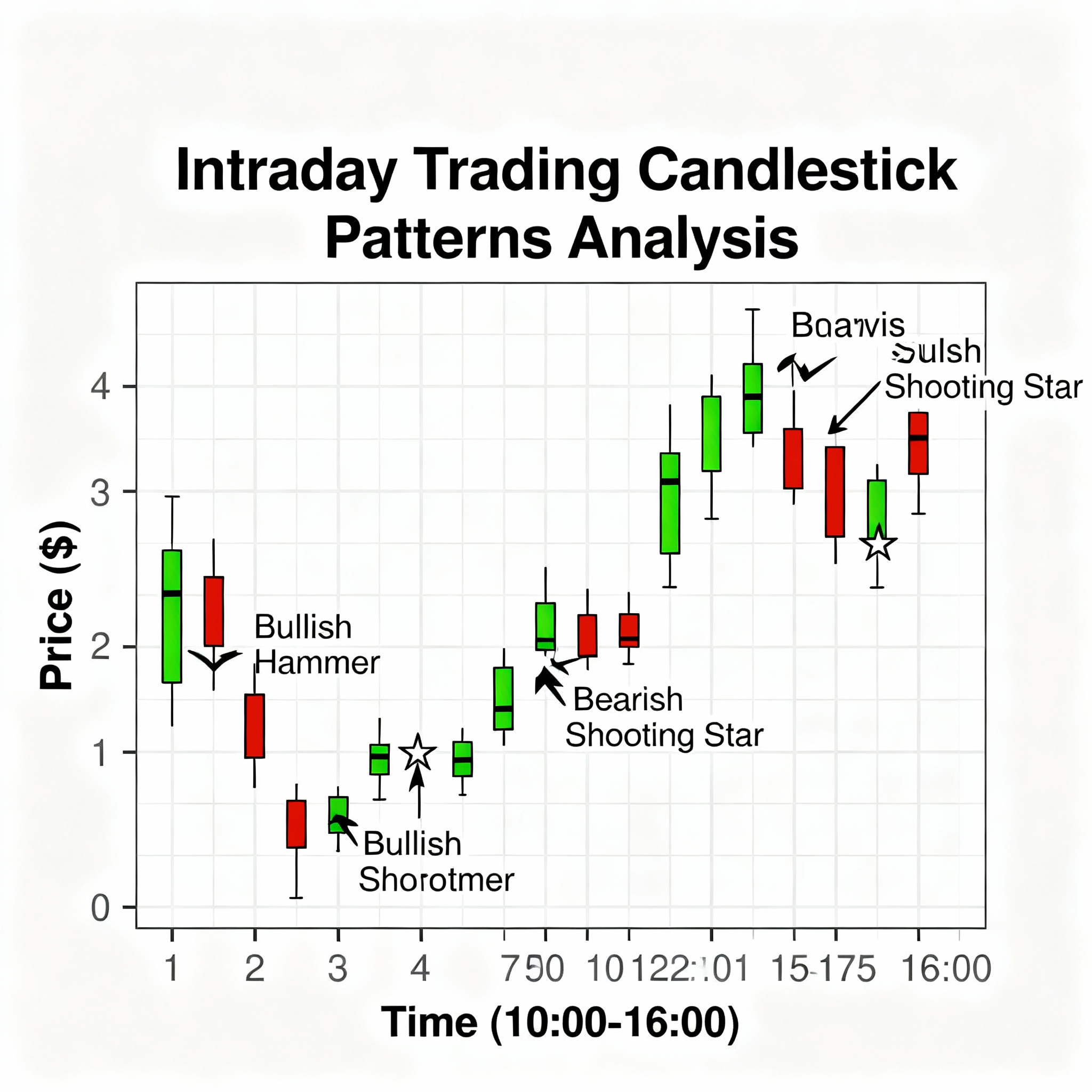
The hammer represents one of the most reliable candlestick patterns intraday trading for identifying potential bullish reversals. This candlestick chart analysis formation appears at the end of downtrends, featuring a small body with a long lower shadow that should be at least twice the body size.
Hammer patterns in candlestick chart analysis indicate that sellers pushed prices lower during the session, but buyers regained control and drove prices back up near the opening level. This price action suggests capitulation bottoms and provides excellent entry opportunities for candlestick patterns intraday trading.
The Shooting Star Formation
Shooting star patterns represent bearish reversal signals in candlestick chart analysis, typically appearing at the top of uptrends. These candlestick patterns intraday trading formations feature small bodies with long upper shadows, indicating that buyers lost control after initially pushing prices higher.
The shooting star’s effectiveness in candlestick chart analysis comes from its ability to identify when frantic late buyers enter the market just as profit-taking begins. This creates ideal conditions for candlestick patterns intraday trading on the short side.
Doji Patterns and Market Indecision
Doji formations represent critical indecision points in candlestick chart analysis, where opening and closing prices remain virtually identical. These candlestick patterns intraday trading indicate equilibrium between buyers and sellers, often preceding significant market moves.
Different types of doji patterns provide varying signals in candlestick chart analysis. Dragonfly dojis show bullish potential, while gravestone dojis suggest bearish reversals. The context surrounding doji formations determines their effectiveness in candlestick patterns intraday trading strategies.
Multiple Candlestick Pattern Analysis
Bullish Engulfing Patterns
Bullish engulfing formations rank among the most powerful candlestick patterns intraday trading for identifying trend reversals. This candlestick chart analysis pattern consists of a small bearish candle followed by a larger bullish candle that completely engulfs the previous candle’s body.
The strength of bullish engulfing patterns in candlestick chart analysis comes from the dramatic shift in market sentiment they represent. When candlestick patterns intraday trading show this formation at key support levels, they provide high-probability long entry opportunities.
Bearish Engulfing Formations
Bearish engulfing patterns serve as powerful bearish reversal signals in candlestick chart analysis, appearing at the peaks of uptrends. These candlestick patterns intraday trading formations consist of a small bullish candle followed by a larger bearish candle that engulfs the previous body.
Professional candlestick chart analysis recognizes bearish engulfing patterns as strong sell signals, particularly when they form at resistance levels. The larger the engulfing candle compared to the previous one, the stronger the signal becomes for candlestick patterns intraday trading.
Morning Star Pattern Complex
Morning star patterns represent three-candle bullish reversal formations in candlestick chart analysis, appearing at the bottom of downtrends. This candlestick patterns intraday trading sequence consists of a large bearish candle, followed by a small indecision candle, then a large bullish candle.
The psychology behind morning star patterns in candlestick chart analysis reflects the transition from bearish to bullish market sentiment. The second candle’s indecision signals weakening selling pressure, while the third candle confirms buyers have regained control for candlestick patterns intraday trading.
Evening Star Reversal Signal
Evening star formations provide bearish reversal signals in candlestick chart analysis, marking the end of uptrends. These candlestick patterns intraday trading consist of three candles: a large bullish candle, a small indecision candle, and a large bearish candle.
The evening star’s effectiveness in candlestick chart analysis stems from its ability to identify when buying momentum exhausts itself. This three-candle pattern provides clear entry signals for short positions in candlestick patterns intraday trading strategies.
Volume Integration with Candlestick Analysis
Volume Confirmation Principles
Successful candlestick chart analysis requires volume confirmation to validate pattern reliability. Candlestick patterns intraday trading without volume support often fail to produce expected price movements, making volume analysis crucial for pattern confirmation.
Volume candlesticks incorporate trading volume directly into candle width, providing immediate visual feedback about market participation. High volume during candlestick chart analysis patterns indicates strong conviction behind price movements, improving the success rate of candlestick patterns intraday trading.
Climactic Volume Patterns
Climactic volume signatures often accompany significant reversal patterns in candlestick chart analysis. When hammer or shooting star formations occur with exceptionally high volume, they provide stronger signals for candlestick patterns intraday trading strategies.
Professional traders look for volume spikes during key candlestick chart analysis formations because they indicate institutional participation. These climactic volume patterns help identify the most reliable candlestick patterns intraday trading opportunities.
Volume Divergence Analysis
Volume divergence provides additional confirmation for candlestick chart analysis patterns. When price makes new highs or lows but volume decreases, it suggests weakening trend strength and potential reversal opportunities for candlestick patterns intraday trading.
Diminishing volume during pullbacks in trending markets often precedes continuation moves in candlestick chart analysis. This volume behavior helps traders distinguish between temporary corrections and genuine reversals in candlestick patterns intraday trading.
Advanced Pattern Recognition Techniques
Spinning Top Analysis
Spinning top patterns represent indecision formations in candlestick chart analysis, featuring small bodies with relatively equal upper and lower shadows. These candlestick patterns intraday trading formations indicate market uncertainty and potential trend changes.
The significance of spinning tops in candlestick chart analysis depends heavily on their location within trends. Spinning tops at trend extremes often signal reversal potential, while those within trends may indicate temporary consolidation for candlestick patterns intraday trading.
Harami Pattern Recognition
Harami patterns in candlestick chart analysis consist of a large candle followed by a smaller candle contained within the first candle’s body. These candlestick patterns intraday trading formations suggest weakening momentum and potential trend reversals.
Bullish harami patterns appear in downtrends and suggest buying pressure emergence, while bearish harami formations occur in uptrends indicating selling pressure. The effectiveness of harami patterns in candlestick chart analysis increases when combined with volume confirmation for candlestick patterns intraday trading.
Three Methods Patterns
Rising three methods patterns represent bullish continuation signals in candlestick chart analysis, consisting of a large bullish candle followed by three smaller bearish candles, then another large bullish candle. These candlestick patterns intraday trading formations indicate temporary profit-taking before trend resumption.
Falling three methods provide bearish continuation signals in candlestick chart analysis, showing the opposite formation where bears maintain control despite temporary buying pressure. These patterns help traders identify high-probability continuation trades in candlestick patterns intraday trading.
Market Psychology Through Candlestick Analysis
Understanding Market Sentiment
Candlestick chart analysis provides direct insight into market psychology by revealing the emotional battle between buyers and sellers. Each candlestick formation tells a story about trader behavior and sentiment during specific time periods.
Long candlestick bodies in candlestick chart analysis indicate strong conviction from either buyers or sellers, while small bodies suggest indecision or equilibrium. Understanding this psychology improves decision-making in candlestick patterns intraday trading strategies.
Fear and Greed Indicators
Extreme candlestick formations in candlestick chart analysis often reflect fear and greed emotions that drive market movements. Long wicks indicate rejection of price levels, while gap openings show strong emotional responses to news or events.
These emotional extremes create the best opportunities for candlestick patterns intraday trading because they often mark turning points where sentiment shifts. Recognizing these emotional signatures in candlestick chart analysis helps traders anticipate reversal opportunities.
Integration with Technical Indicators
Moving Average Confluence
Combining candlestick chart analysis with moving averages creates powerful trading setups. When reversal patterns form near key moving averages, they provide stronger signals for candlestick patterns intraday trading strategies.
The interaction between price and moving averages during candlestick chart analysis helps determine trend strength and potential reversal points. This confluence approach improves the reliability of candlestick patterns intraday trading signals significantly.
MACD Integration
MACD indicators complement candlestick chart analysis by providing momentum confirmation for pattern signals. When MACD divergence occurs alongside reversal candlestick patterns, it creates high-probability candlestick patterns intraday trading opportunities.
The combination of MACD signals with candlestick chart analysis helps traders time entries and exits more precisely. This integrated approach reduces false signals and improves the success rate of candlestick patterns intraday trading strategies.
Risk Management in Candlestick Trading
Stop Loss Placement
Proper stop loss placement represents a crucial aspect of candlestick patterns intraday trading success. Stops should be positioned at logical levels that invalidate the pattern’s premise rather than arbitrary percentage levels.
For hammer patterns in candlestick chart analysis, stops typically go below the hammer’s low, while shooting star stops go above the pattern’s high. This approach aligns risk management with market structure in candlestick patterns intraday trading.
Position Sizing Strategies
Effective position sizing in candlestick patterns intraday trading should reflect pattern reliability and market conditions. High-probability setups in candlestick chart analysis may warrant larger position sizes, while lower-probability patterns require smaller positions.
Professional traders adjust position sizes based on the strength of candlestick chart analysis signals and overall market volatility. This dynamic approach to position sizing optimizes risk-reward ratios in candlestick patterns intraday trading.
Common Mistakes in Candlestick Analysis
Pattern Recognition Errors
Many traders make mistakes by forcing candlestick chart analysis patterns where none exist or ignoring market context. Successful candlestick patterns intraday trading requires patience to wait for genuine pattern formations in appropriate market conditions.
Context remains crucial in candlestick chart analysis because the same pattern can have different implications depending on trend direction, support/resistance levels, and overall market sentiment. Ignoring context leads to poor candlestick patterns intraday trading results.
Volume Neglect
Failing to consider volume during candlestick chart analysis represents a significant mistake that reduces pattern reliability. Candlestick patterns intraday trading without volume confirmation often produce false signals and losing trades.
Professional traders always examine volume behavior during candlestick chart analysis to ensure institutional participation supports their pattern interpretations. This volume analysis significantly improves candlestick patterns intraday trading success rates.
Building a Complete Candlestick Trading System
Pattern Scanning Methods
Developing systematic approaches to candlestick chart analysis helps traders identify the best candlestick patterns intraday trading opportunities consistently. This involves creating watchlists and scanning procedures to find patterns meeting specific criteria.
Professional pattern scanning in candlestick chart analysis considers multiple factors including pattern quality, volume confirmation, and market context. This systematic approach improves the consistency of candlestick patterns intraday trading results.
Trade Management Protocols
Successful candlestick patterns intraday trading requires predetermined trade management rules for entry, exit, and position adjustment. These protocols should address both winning and losing scenarios to maintain consistency.
Trade management in candlestick chart analysis should include profit-taking strategies, stop loss adjustments, and position scaling techniques. This comprehensive approach maximizes the profitability of candlestick patterns intraday trading strategies.
Comprehensive candlestick chart analysis showing various bullish and bearish patterns for intraday trading
Disclaimer: The information provided in this article about candlestick chart analysis and candlestick patterns intraday trading is for educational purposes only and should not be considered as financial advice. Trading in financial markets involves substantial risk and may not be suitable for all investors. Past performance of candlestick chart analysis patterns does not guarantee future results. Before implementing any candlestick patterns intraday trading strategies, please consult with a qualified financial advisor and consider your risk tolerance, financial situation, and investment objectives. The author and Trading Strategys website are not responsible for any financial losses that may result from the use of these candlestick chart analysis techniques. Always conduct your own research and due diligence before making any trading decisions involving candlestick patterns intraday trading strategies.
Keywords & Hashtags:
#CandlestickAnalysis #IntradayTrading #CandlestickPatterns #JapaneseCandlesticks #TechnicalAnalysis #VolumeAnalysis #BullishPatterns #BearishPatterns #MorningStar #EveningStar #Hammer #ShootingStar #Doji #EngulfingPatterns #TradingStrategies #MarketPsychology #PriceAction #DayTrading #ChartAnalysis #TradingEducation