
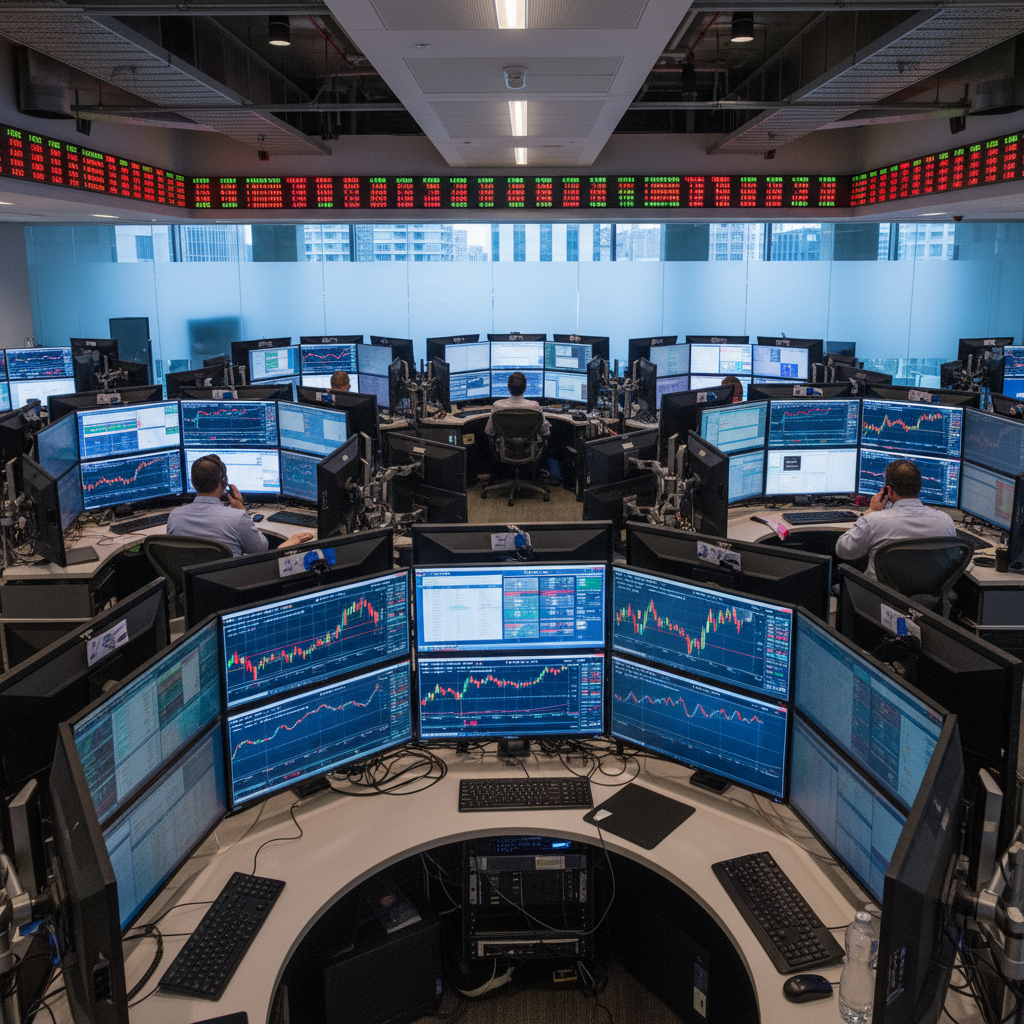
Institutional trading represents the backbone of modern financial markets, where large financial entities execute massive transactions using sophisticated trading systems. Unlike retail trading, institutional trading involves banks, hedge funds, mutual funds, and pension funds managing billions of dollars through advanced trading systems designed for high-volume, low-latency execution.
Institutional trading and trading systems work together to facilitate seamless market operations, with institutional trading strategies requiring specialized trading systems to handle complex orders while minimizing market impact. Understanding institutional trading and trading systems is crucial for comprehending how modern financial markets operate at their core.
Understanding Institutional Trading Fundamentals
Institutional trading refers to the buying and selling of financial assets by large organizations rather than individual investors. These institutional trading entities include banks, hedge funds, mutual funds, pension funds, insurance companies, and investment firms that manage substantial capital on behalf of clients or shareholders.
Institutional trading differs significantly from retail trading in scale, strategy, and execution methods. While retail traders typically handle small positions, institutional trading involves transactions worth millions or billions of dollars, requiring specialized trading systems and sophisticated execution strategies to avoid disrupting market prices.
The primary participants in institutional trading include mutual funds managing retirement savings, hedge funds implementing complex strategies, pension funds securing long-term returns, and banks facilitating client transactions. These institutional trading entities collectively account for the majority of daily trading volume across global financial markets.
Institutional trading entities possess several advantages over retail traders, including access to better pricing, advanced trading systems, exclusive market data, and direct relationships with exchanges and market makers. These advantages enable institutional trading operations to achieve superior execution quality and reduced transaction costs.
Core Components of Trading Systems
Trading systems represent the technological infrastructure powering institutional trading operations. Modern trading systems encompass order management systems (OMS), portfolio management systems (PMS), risk management modules, and execution management systems (EMS) working in concert to support institutional trading activities.
Trading systems for institutional trading must handle massive data volumes, execute thousands of transactions per second, and integrate with multiple exchanges and liquidity providers. These trading systems require ultra-low latency connectivity, robust risk controls, and comprehensive reporting capabilities to meet institutional trading demands.
Advanced trading systems incorporate artificial intelligence and machine learning algorithms to optimize institutional trading execution. These trading systems analyze market conditions in real-time, adjusting institutional trading strategies dynamically to achieve best execution and minimize market impact.
Trading systems architecture for institutional trading typically includes direct market access (DMA), smart order routing (SOR), and algorithmic execution engines. These trading systems components work together to ensure institutional trading operations achieve optimal execution across fragmented market structures.
Algorithmic Trading in Institutional Systems
Institutional trading heavily relies on algorithmic trading strategies executed through sophisticated trading systems. Algorithmic trading in institutional trading uses pre-programmed instructions to execute orders based on variables like time, price, and volume, enabling institutional trading entities to process complex strategies automatically.
Trading systems supporting institutional trading incorporate various algorithmic strategies including Volume Weighted Average Price (VWAP), Time Weighted Average Price (TWAP), and Implementation Shortfall algorithms. These trading systems help institutional trading operations achieve consistent execution quality while managing market impact.
High-frequency trading (HFT) represents an advanced form of algorithmic trading within institutional trading operations. Trading systems supporting HFT can execute thousands of trades per second, enabling institutional trading entities to capitalize on minute price discrepancies across different markets and timeframes.
Institutional trading algorithms within trading systems often focus on execution optimization rather than strategy generation. These trading systems help institutional trading operations minimize transaction costs, reduce market impact, and achieve better fill rates compared to manual execution methods.
Dark Pools and Private Trading Venues
Dark pools represent private trading systems exclusively used for institutional trading operations. These trading systems allow institutional trading entities to execute large orders without revealing their intentions to the broader market, preventing adverse price movements that could impact execution quality.
Institutional trading through dark pools provides several advantages including reduced market impact, better pricing opportunities, and increased anonymity. Trading systems supporting dark pool execution enable institutional trading operations to find liquidity without exposing order information to competitors or high-frequency traders.
There are three main types of dark pools within institutional trading trading systems: broker-dealer owned pools, agency broker pools, and electronic market maker pools. Each type of trading system serves different institutional trading needs, from internal order matching to external liquidity aggregation.
Dark pool trading systems for institutional trading typically execute trades at midpoint prices between bid and ask spreads. These trading systems help institutional trading operations achieve price improvement while maintaining order confidentiality, making them essential components of modern institutional trading infrastructure.
Smart Order Routing Technology
Smart Order Routing (SOR) represents a critical component of institutional trading trading systems. SOR technology automatically directs orders to optimal execution venues based on real-time market conditions, helping institutional trading operations achieve best execution across fragmented markets.
Trading systems with SOR capabilities analyze multiple factors including price, liquidity, fees, and latency across various venues. These trading systems enable institutional trading operations to access the best available liquidity while minimizing execution costs and market impact.
Advanced SOR trading systems for institutional trading incorporate machine learning algorithms that adapt to changing market conditions. These trading systems continuously optimize routing decisions, ensuring institutional trading operations maintain execution quality as market structure evolves.
Institutional trading trading systems with SOR functionality can simultaneously route orders to multiple venues, including exchanges, dark pools, and alternative trading systems. This capability enables institutional trading operations to maximize fill rates while achieving optimal pricing across diverse liquidity sources.
Execution Management Systems
Execution Management Systems (EMS) serve as the core trading systems for institutional trading operations. EMS platforms integrate order management, market data, analytics, and execution capabilities into unified trading systems designed specifically for institutional trading requirements.
Modern EMS trading systems for institutional trading provide real-time market data from multiple sources, advanced charting capabilities, and sophisticated order types. These trading systems enable institutional trading professionals to make informed decisions quickly while managing complex multi-asset portfolios.
Trading systems like EMS platforms support various institutional trading strategies including pairs trading, statistical arbitrage, and momentum-based approaches. These trading systems provide the flexibility and functionality required for diverse institutional trading strategies across different asset classes.
Institutional trading EMS trading systems typically offer customizable dashboards, advanced analytics, and comprehensive compliance tools. These trading systems help institutional trading operations maintain regulatory compliance while optimizing execution performance across global markets.
Risk Management in Trading Systems
Risk management represents a fundamental component of institutional trading trading systems. Trading systems incorporate real-time risk monitoring, position limits, and automated controls to protect institutional trading operations from excessive losses and regulatory violations.
Institutional trading trading systems implement pre-trade risk checks that evaluate orders against predefined parameters before execution. These trading systems prevent institutional trading operations from exceeding position limits, violating regulatory requirements, or taking inappropriate risks.
Advanced trading systems for institutional trading use Value-at-Risk (VaR) models and stress testing to quantify potential losses. These trading systems enable institutional trading risk managers to understand portfolio exposures and adjust positions proactively to maintain acceptable risk levels.
Trading systems supporting institutional trading provide real-time monitoring of margin requirements, concentration limits, and exposure calculations. These trading systems help institutional trading operations maintain compliance with internal policies and external regulatory requirements while maximizing investment opportunities.
Types of Institutional Trading Strategies
Institutional trading strategies vary significantly based on investment objectives, time horizons, and market conditions. Trading systems must support diverse institutional trading approaches including index rebalancing, asset allocation, factor investing, and tactical trading strategies.
Index rebalancing represents a common institutional trading strategy where trading systems automatically adjust portfolio weights to maintain target allocations. These trading systems help institutional trading operations minimize tracking error while reducing transaction costs through efficient execution timing.
Factor investing strategies within institutional trading use trading systems to implement systematic approaches based on value, momentum, quality, and low volatility factors. These trading systems enable institutional trading operations to capture risk premiums while maintaining diversified exposures across multiple factors.
Statistical arbitrage strategies in institutional trading rely on sophisticated trading systems to identify and exploit temporary price relationships between securities. These trading systems must process vast amounts of data quickly to enable institutional trading operations to profit from short-lived market inefficiencies.
Technology Infrastructure Requirements
Institutional trading trading systems require robust technology infrastructure to support high-volume, low-latency operations. Trading systems infrastructure includes high-performance servers, ultra-fast network connections, and redundant systems to ensure continuous institutional trading operations.
Trading systems supporting institutional trading must handle peak trading volumes without performance degradation. These trading systems require scalable architecture that can accommodate growing institutional trading volumes while maintaining consistent execution quality and system reliability.
Institutional trading trading systems incorporate advanced security measures including encryption, multi-factor authentication, and intrusion detection systems. These trading systems protect sensitive institutional trading data and prevent unauthorized access to critical trading infrastructure.
Cloud-based trading systems are increasingly popular for institutional trading operations seeking flexibility and cost efficiency. These trading systems enable institutional trading entities to scale resources dynamically while accessing advanced analytics and execution capabilities through managed services.
Regulatory Compliance and Surveillance
Institutional trading operations must comply with extensive regulatory requirements supported by specialized trading systems. Trading systems incorporate comprehensive surveillance capabilities to monitor institutional trading activities for market manipulation, insider trading, and other regulatory violations.
Trading systems for institutional trading maintain detailed audit trails documenting all order modifications, executions, and cancellations. These trading systems enable institutional trading operations to demonstrate compliance with regulatory requirements and support regulatory examinations when required.
MiFID II and Regulation NMS significantly impact institutional trading trading systems design and functionality. Trading systems must incorporate best execution monitoring, transaction reporting, and market data transparency features to support institutional trading compliance obligations.
Trading systems supporting institutional trading include real-time surveillance algorithms that flag suspicious trading patterns. These trading systems help institutional trading operations identify potential compliance issues before they become regulatory problems, protecting both firms and clients.
Market Impact and Liquidity Management
Institutional trading operations must carefully manage market impact when executing large orders through trading systems. Trading systems incorporate sophisticated algorithms designed to minimize price disruption while achieving acceptable execution quality for institutional trading operations.
Volume participation algorithms within trading systems help institutional trading operations control their market footprint. These trading systems adjust order sizes and timing based on historical volume patterns, enabling institutional trading entities to execute large orders without dominating market activity.
Implementation shortfall algorithms in trading systems balance market impact against timing risk for institutional trading operations. These trading systems optimize the trade-off between immediate execution and patient order working, helping institutional trading entities achieve cost-effective execution.
Trading systems supporting institutional trading provide real-time market impact analysis and execution quality metrics. These trading systems enable institutional trading professionals to evaluate execution performance and refine strategies to improve future trading outcomes.
Integration with Portfolio Management
Institutional trading trading systems must integrate seamlessly with portfolio management systems to support investment decision-making. Trading systems receive allocation instructions from portfolio managers and translate them into executable orders while maintaining position accuracy and compliance.
Order management system (OMS) integration enables trading systems to support complex institutional trading workflows. These trading systems coordinate between portfolio management, compliance, and execution functions to ensure institutional trading operations maintain operational efficiency.
Trading systems for institutional trading provide real-time position updates and cash management capabilities. These trading systems enable institutional trading operations to maintain accurate books and records while supporting dynamic portfolio rebalancing activities.
Performance attribution capabilities within trading systems help institutional trading operations understand the impact of execution decisions on portfolio returns. These trading systems provide detailed analysis of execution costs, market impact, and timing effects to support continuous improvement in institutional trading performance.
Alternative Trading Systems
Alternative Trading Systems (ATS) represent specialized trading systems designed for institutional trading operations. ATS platforms provide institutional trading entities with alternatives to traditional exchanges, offering unique execution methods and liquidity sources.
Electronic Communication Networks (ECNs) function as trading systems that automatically match institutional trading orders. These trading systems provide institutional trading operations with direct access to other institutional investors, enabling efficient price discovery and execution.
Crossing networks represent trading systems specifically designed for institutional trading block transactions. These trading systems match institutional trading orders at predetermined times and prices, typically at midpoint levels between bid and ask spreads.
Institutional trading trading systems increasingly incorporate ATS connectivity to access diverse liquidity sources. These trading systems enable institutional trading operations to optimize execution quality by accessing both traditional and alternative market structures simultaneously.
Artificial Intelligence and Machine Learning
Artificial intelligence integration is transforming institutional trading trading systems. AI-powered trading systems analyze vast datasets to identify patterns and optimize institutional trading execution strategies in real-time, providing competitive advantages for sophisticated investors.
Machine learning algorithms within trading systems continuously adapt to changing market conditions affecting institutional trading performance. These trading systems learn from historical execution data to improve future institutional trading outcomes while reducing human intervention requirements.
Natural language processing capabilities in trading systems help institutional trading operations analyze news, earnings calls, and regulatory filings. These trading systems provide institutional trading entities with timely insights that can inform investment decisions and execution timing.
Predictive analytics features within trading systems help institutional trading operations anticipate market movements and adjust strategies accordingly. These trading systems use advanced statistical models to forecast price movements, volatility, and liquidity conditions affecting institutional trading performance.
Global Market Access and Connectivity
Institutional trading trading systems provide access to global markets through sophisticated connectivity solutions. Trading systems must support multiple currencies, time zones, and regulatory regimes to enable institutional trading operations to capitalize on worldwide investment opportunities.
FIX protocol integration enables trading systems to communicate efficiently with global counterparties in institutional trading operations. These trading systems use standardized messaging to ensure reliable order transmission and execution reporting across diverse institutional trading networks.
Trading systems supporting institutional trading must handle complex settlement and custody arrangements for international transactions. These trading systems coordinate with multiple custodians, clearinghouses, and settlement systems to ensure smooth institutional trading operations across global markets.
Multi-asset capabilities within trading systems enable institutional trading operations to execute strategies across equities, fixed income, derivatives, and alternative investments. These trading systems provide unified interfaces for managing diverse institutional trading portfolios through single platforms.
Disclaimer: This article is provided for educational purposes only and should not be considered as financial advice. Institutional trading and trading systems information discussed here is for informational purposes and may not be suitable for all investors. The institutional trading strategies and trading systems described are complex and typically require substantial capital, advanced technology, and professional expertise. Institutional trading involves significant risks including market risk, operational risk, and regulatory compliance requirements. Trading systems performance can vary based on market conditions, technology capabilities, and implementation quality. Always consult with qualified financial professionals and technology experts before implementing any institutional trading strategies or trading systems. Past performance of institutional trading operations and trading systems does not guarantee future results.
Keywords: #InstitutionalTrading #TradingSystems #AlgorithmicTrading #DarkPools #SmartOrderRouting #ExecutionManagementSystems #HighFrequencyTrading #PortfolioManagement #RiskManagement #MarketStructure