
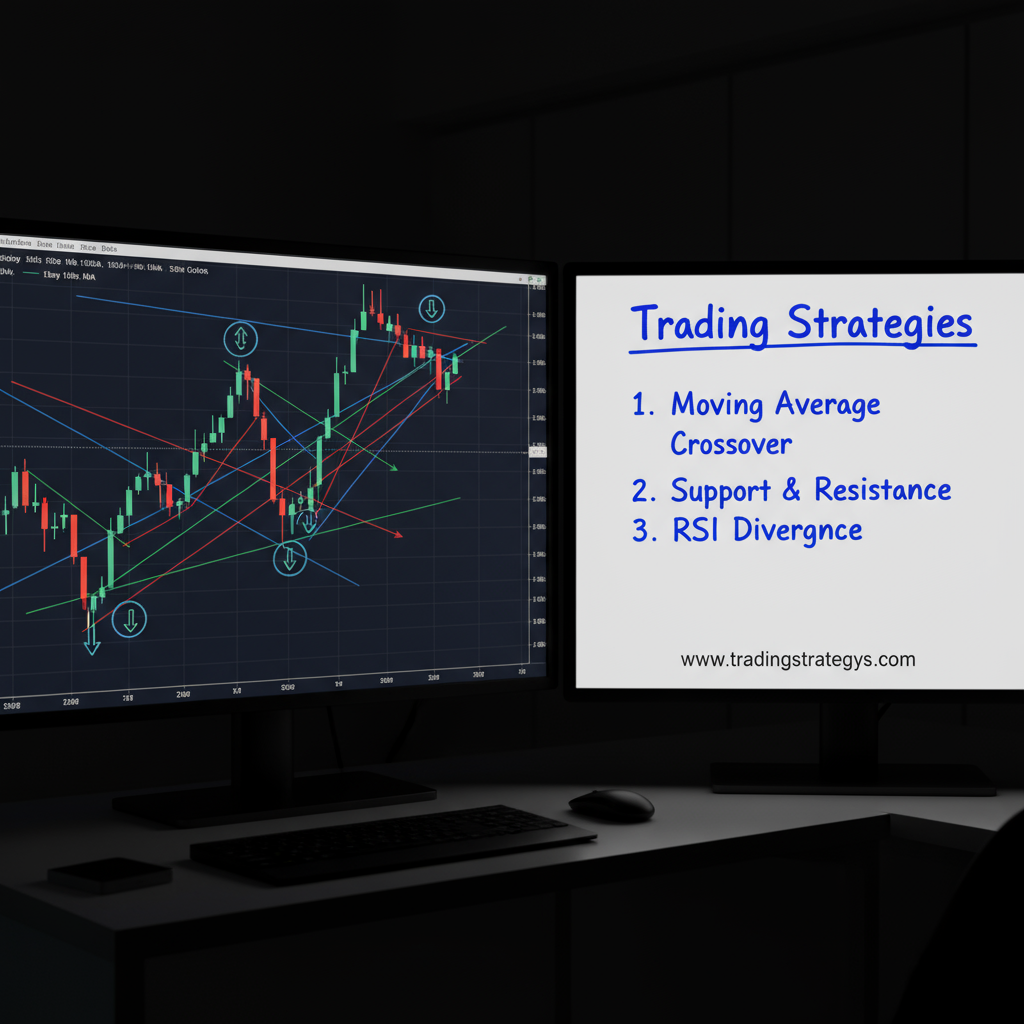
Introduction to Moving Average Intraday Trading Strategies
Moving average intraday trading strategies serve as fundamental pillars for beginner traders entering the complex world of day trading. These powerful methodologies utilize mathematical calculations to smooth price data, revealing underlying trends and generating clear trading signals throughout market sessions. For newcomers to trading, moving average intraday trading strategies offer simplicity combined with effectiveness, making them ideal starting points for developing profitable trading approaches.
The core principle behind moving average intraday trading strategies involves analyzing price movements over specific time periods to identify trend direction and momentum. Unlike complex indicator-based systems, moving average intraday trading strategies rely on straightforward calculations that even beginner traders can understand and implement successfully. These strategies help filter market noise while providing clear entry and exit signals based on proven mathematical foundations.
Understanding Moving Average Fundamentals
Moving average intraday trading strategies begin with comprehending the two primary types of moving averages: Simple Moving Average (SMA) and Exponential Moving Average (EMA). The SMA calculates the arithmetic mean of closing prices over a specified period, providing equal weight to all data points within the calculation window. This characteristic makes SMA ideal for moving average intraday trading strategies focused on identifying stable, long-term trends.
The calculation formula for SMA involves adding closing prices over the selected period and dividing by the number of periods. For example, a 20-day SMA adds twenty consecutive closing prices and divides the sum by twenty. This simple calculation forms the foundation of many successful moving average intraday trading strategies used by professional traders worldwide.
Exponential Moving Average offers more responsive calculations within moving average intraday trading strategies frameworks. EMA assigns greater weight to recent price data, making it more sensitive to current market conditions. This enhanced responsiveness makes EMA particularly valuable for moving average intraday trading strategies requiring quick reaction to price changes and momentum shifts.
The EMA calculation uses a smoothing factor that gives more importance to recent prices while still considering historical data. This mathematical approach creates moving average intraday trading strategies that adapt quickly to changing market conditions while maintaining trend identification capabilities. Professional traders often prefer EMA for short-term trading due to its responsiveness.
Simple Moving Average (SMA) Trading Strategies
Simple Moving Average strategies form the cornerstone of effective moving average intraday trading strategies for beginner traders. The 20-day SMA serves as a popular choice for identifying intermediate-term trends within intraday timeframes. When prices trade above the 20-day SMA, it suggests bullish conditions suitable for long positions within moving average intraday trading strategies.
Support and resistance identification represents a crucial application of SMA in moving average intraday trading strategies. During uptrends, the SMA often acts as dynamic support where prices tend to bounce higher. Conversely, in downtrends, the SMA functions as dynamic resistance, preventing upward price movement. This dual functionality makes SMA invaluable for moving average intraday trading strategies implementation.
Multiple SMA periods create comprehensive moving average intraday trading strategies systems. Combining 10, 20, and 50-period SMAs provides multiple confirmation levels for trade signals. When all three SMAs align in the same direction, it indicates strong trend conditions ideal for moving average intraday trading strategies execution.
Price crossover signals generate clear entry and exit points within moving average intraday trading strategies. Bullish crossovers occur when prices move above the SMA, suggesting potential upward momentum. Bearish crossovers happen when prices fall below the SMA, indicating possible downward pressure. These crossover signals form the basis of many successful moving average intraday trading strategies.
Exponential Moving Average (EMA) Trading Strategies
The 8, 13, 21 EMA combination represents one of the most effective moving average intraday trading strategies for capturing short-term momentum. This Fibonacci-based sequence provides excellent responsiveness to price changes while maintaining trend identification capabilities. The 8 EMA acts as the fastest signal line, the 13 EMA provides medium-term confirmation, and the 21 EMA offers longer-term trend context.
Entry signals within this moving average intraday trading strategies framework occur when the 8 EMA crosses above both the 13 and 21 EMAs simultaneously. This bullish alignment suggests strong upward momentum and provides high-probability long entry opportunities. The reverse scenario, with the 8 EMA crossing below both longer EMAs, generates bearish signals for short positions.
EMA support and resistance levels create dynamic trading zones within moving average intraday trading strategies. The 21 EMA often serves as the primary support level during uptrends, while the 13 EMA provides secondary support. Price bounces from these EMA levels offer excellent entry opportunities for continuation trades within established trends.
Stop-loss placement using EMA levels enhances risk management within moving average intraday trading strategies. Placing stops just below the 13 EMA for long positions provides logical exit points that respect market structure. This approach helps maintain favorable risk-reward ratios while giving trades sufficient room to develop profitably.
Golden Cross and Death Cross Patterns
The Golden Cross pattern stands as one of the most powerful bullish signals within moving average intraday trading strategies. This pattern occurs when a shorter-term moving average crosses above a longer-term moving average, typically the 50-day MA crossing above the 200-day MA. Golden Cross formations suggest the beginning of strong upward trends ideal for long-term position building.
Death Cross patterns represent the bearish counterpart within moving average intraday trading strategies frameworks. These formations occur when shorter-term moving averages cross below longer-term averages, signaling potential downward trend development. Death Cross patterns warn traders of impending bearish conditions requiring protective actions or short position considerations.
Volume confirmation enhances the reliability of both Golden Cross and Death Cross patterns within moving average intraday trading strategies. High volume accompanying crossover formations indicates strong institutional participation and genuine trend changes. Low volume crossovers may represent false signals requiring additional confirmation before trading action.
Time frame analysis improves Golden Cross and Death Cross effectiveness in moving average intraday trading strategies. While traditional definitions use daily charts, intraday traders can apply these concepts to shorter timeframes like 15-minute or hourly charts. This adaptation allows for more frequent signal generation while maintaining pattern reliability.
Moving Average Convergence Divergence (MACD) Strategy
MACD combines multiple moving averages to create comprehensive moving average intraday trading strategies for momentum analysis. The indicator consists of three components: the MACD line (difference between 12-period and 26-period EMAs), the signal line (9-period EMA of MACD line), and the histogram (difference between MACD and signal lines). This tri-component structure provides multiple confirmation levels.
Signal line crossovers generate primary trading signals within MACD-based moving average intraday trading strategies. Bullish signals occur when the MACD line crosses above the signal line, particularly when both lines are below zero. Bearish signals develop when the MACD line crosses below the signal line, especially when both lines are above zero.
Zero-line crossovers provide secondary confirmation within moving average intraday trading strategies using MACD. When MACD crosses above zero, it suggests strengthening bullish momentum. Conversely, MACD crossing below zero indicates increasing bearish pressure. These zero-line crossovers help confirm trend direction changes.
Divergence analysis represents the most powerful application of MACD within moving average intraday trading strategies. Bullish divergence occurs when prices make lower lows while MACD makes higher lows, suggesting weakening selling pressure. Bearish divergence develops when prices make higher highs while MACD shows lower highs, indicating diminishing buying strength.
Moving Average Ribbon Strategy
Moving Average Ribbon strategies utilize multiple moving averages simultaneously to create comprehensive moving average intraday trading strategies systems. Typical ribbon configurations include 6-8 moving averages with periods like 10, 20, 30, 40, 50, and 60. This multi-average approach provides nuanced trend analysis and signal confirmation.
Ribbon expansion and contraction patterns generate important signals within moving average intraday trading strategies. Expanding ribbons occur when moving averages separate, indicating potential trend exhaustion or reversal conditions. Contracting ribbons suggest consolidation periods preceding significant price movements, creating anticipatory trading opportunities.
Parallel ribbon formations identify strong trending conditions within moving average intraday trading strategies. When all moving averages move in the same direction with consistent spacing, it indicates powerful trend momentum. These conditions favor continuation strategies rather than countertrend approaches.
Price position relative to the ribbon determines trade direction within moving average intraday trading strategies. Prices above all ribbon components suggest bullish conditions suitable for long positions. Prices below the entire ribbon indicate bearish environments favoring short trades. This positioning analysis simplifies complex market analysis.
Multiple Timeframe Analysis
Professional moving average intraday trading strategies incorporate multiple timeframe analysis for enhanced accuracy. Using higher timeframes like 60-minute charts for trend direction while employing 5-15 minute charts for precise entry timing creates comprehensive trading approaches. This multi-dimensional analysis significantly improves signal reliability and trading outcomes.
Trend alignment across timeframes strengthens moving average intraday trading strategies signal quality. When moving averages on both higher and lower timeframes point in the same direction, it provides strong confirmation for trade entries. This alignment reduces false signals and improves overall strategy performance.
Entry timing refinement using multiple timeframes enhances moving average intraday trading strategies execution. Identifying trend direction on longer timeframes while timing entries on shorter timeframes optimizes risk-reward ratios. This approach allows traders to capture larger moves while minimizing entry risk.
Risk Management in Moving Average Trading
Effective risk management forms the foundation of successful moving average intraday trading strategies implementation. Position sizing should reflect signal strength and timeframe analysis, with stronger signals warranting larger positions. Moving average-based stop-loss placement provides logical exit points that respect market structure and trend dynamics.
Stop-loss positioning using moving average levels creates systematic risk management within moving average intraday trading strategies. Placing stops below key moving averages for long positions or above them for short positions provides clear exit rules. This approach removes emotional decision-making from risk management processes.
Profit-taking strategies utilizing moving average levels optimize moving average intraday trading strategies outcomes. Taking partial profits at moving average resistance levels while allowing remaining positions to run maximizes profit potential. This scaled approach accommodates varying market conditions and trend strengths.
Common Moving Average Trading Mistakes
Overreliance on single moving averages represents a critical error in moving average intraday trading strategies implementation. Using multiple confirmation levels and complementary indicators improves signal reliability and reduces false entries. Successful traders combine moving averages with volume analysis, support/resistance levels, and momentum indicators.
Ignoring market context creates another significant mistake in moving average intraday trading strategies. Moving averages work best in trending markets but generate false signals in ranging conditions. Understanding market structure and adapting strategies accordingly improves long-term success rates.
Inappropriate timeframe selection limits moving average intraday trading strategies effectiveness. Shorter timeframes generate more signals but increase noise and false signals. Longer timeframes provide more reliable signals but fewer trading opportunities. Finding the optimal balance requires practice and market understanding.
Building Confidence Through Practice
Developing proficiency in moving average intraday trading strategies requires extensive backtesting and practice. Study historical charts to identify successful patterns and understand how different market conditions affect signal reliability. This analysis builds pattern recognition skills essential for real-time trading success.
Paper trading provides risk-free practice for moving average intraday trading strategies refinement. Testing different moving average combinations and timeframes without financial risk allows strategy optimization before live trading. Focus on consistency and following predetermined rules rather than profit maximization during practice phases.
Psychology and Discipline in Moving Average Trading
Successful moving average intraday trading strategies execution requires strong psychological discipline and patience. Moving averages provide clear signals, but emotional control remains essential for consistent implementation. Develop systematic approaches that eliminate emotional decision-making from trading processes.
Creating detailed trading plans with specific moving average criteria removes guesswork from moving average intraday trading strategies. Document entry rules, exit strategies, and risk parameters for different market scenarios. Following predetermined plans consistently improves results and builds trading confidence over time.
Advanced Moving Average Concepts
Adaptive moving averages represent cutting-edge developments in moving average intraday trading strategies. These indicators automatically adjust their sensitivity based on market volatility, providing more responsive signals during active periods and smoother readings during quiet conditions. Advanced traders incorporate these adaptive techniques for enhanced performance.
Moving average envelopes create dynamic support and resistance levels within moving average intraday trading strategies frameworks. These envelopes plot bands above and below moving averages at fixed percentages, identifying overbought and oversold conditions. This technique combines trend following with mean reversion concepts.
Conclusion
Moving average intraday trading strategies provide beginner traders with powerful, accessible tools for navigating complex financial markets. By mastering SMA, EMA, Golden Cross, Death Cross, and MACD techniques, new traders can develop comprehensive approaches to trend identification and trade timing. The key to success lies in understanding that moving averages work best when combined with proper risk management and disciplined execution.
Remember that effective moving average intraday trading strategies require consistent practice, patience, and continuous learning. Start with simple single moving average strategies before progressing to complex multi-average systems. Focus on quality signals over quantity, and always prioritize risk management over profit maximization. With dedication and proper education, moving average intraday trading strategies can become valuable components of successful trading careers.
Standard Disclaimer: This article is for educational purposes only and should not be considered as financial advice. Trading involves substantial risk of loss and is not suitable for all investors. Past performance does not guarantee future results. Always consult with a qualified financial advisor before making investment decisions and never trade with money you cannot afford to lose.
Website: www.tradingstrategys.com
Keywords: #MovingAverage #IntradayTrading #SMA #EMA #GoldenCross #DeathCross #MACD #TradingStrategies #TechnicalAnalysis #DayTrading #TradingEducation #BeginnerTraders