
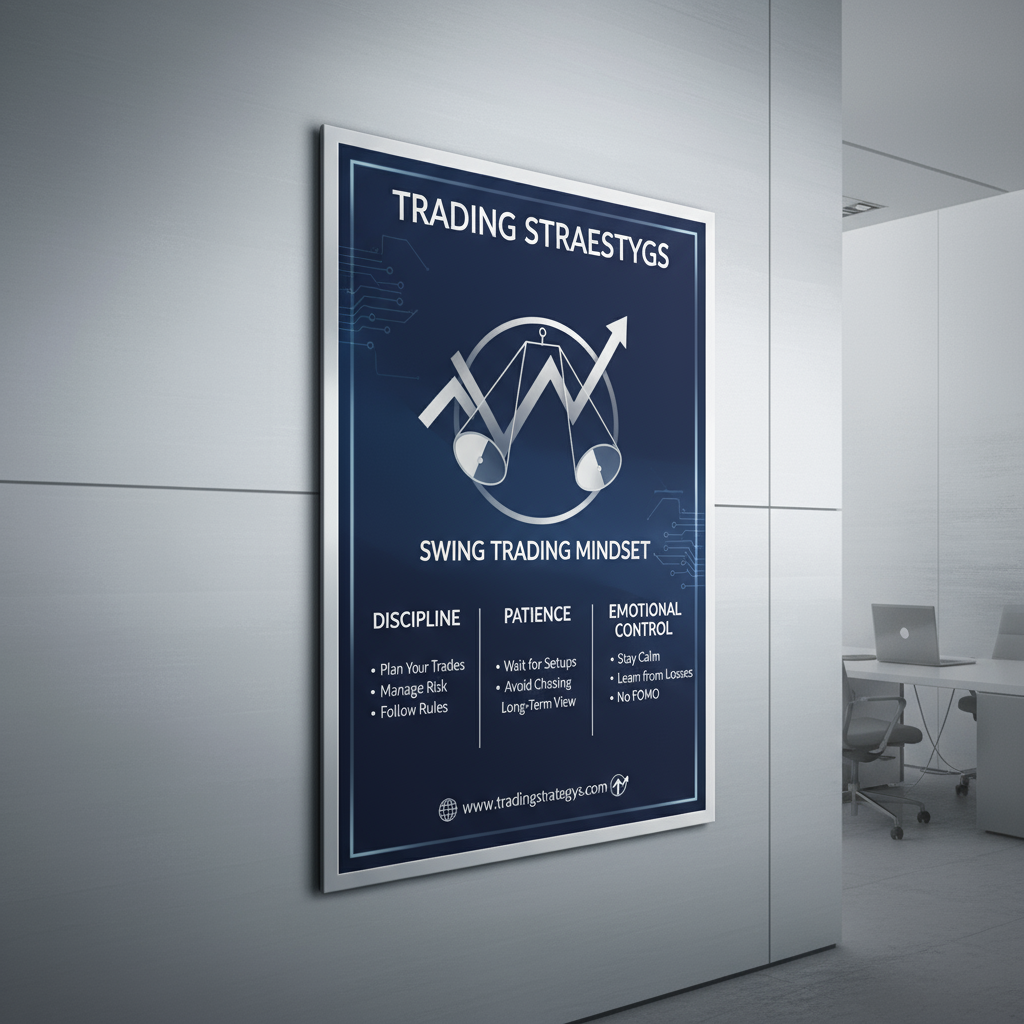
Developing the right swing trading mindset is crucial for beginner traders who want to succeed in the financial markets. Unlike day trading, swing trading mindset requires a unique psychological approach that emphasizes patience, discipline, and emotional control. This comprehensive guide will help you understand the mental framework needed for successful swing trading and provide practical strategies to develop the mindset necessary for consistent profitability.
Understanding the Swing Trading Mindset
The swing trading mindset is fundamentally different from other trading approaches. Swing traders hold positions for days to weeks, capturing price movements or “swings” in the market. This trading style requires developing a swing trading mindset that balances patience with decisive action, allowing you to capitalize on medium-term price movements without the stress of constant market monitoring.
A proper swing trading mindset involves understanding that you’re not trying to predict exact market tops and bottoms. Instead, you’re seeking to capture a portion of significant price movements while maintaining strict risk management protocols. This mindset shift helps beginner traders avoid the common trap of perfectionism that often leads to missed opportunities and emotional trading decisions.
Core Elements of a Winning Swing Trading Mindset
Patience: The Foundation of Swing Trading Mindset
Patience is arguably the most critical component of a successful swing trading mindset. Unlike day traders who seek quick profits, swing traders with the right mindset understand that meaningful price movements take time to develop. This swing trading mindset requires waiting for high-probability setups rather than forcing trades when conditions aren’t optimal.
Developing patience in your swing trading mindset means accepting that you might only execute 10-15 quality trades per month rather than daily trading activity. This patient approach to swing trading mindset helps you avoid overtrading and focus on trades with favorable risk-reward ratios.
Discipline: Executing Your Swing Trading Mindset
Discipline in swing trading mindset involves strict adherence to your trading plan, regardless of market emotions or external pressures. A disciplined swing trading mindset means setting predetermined entry and exit points and sticking to them even when fear or greed attempts to influence your decisions.
The disciplined swing trading mindset also includes proper position sizing, never risking more than 1-2% of your capital on a single trade. This risk management approach is integral to maintaining a professional swing trading mindset that prioritizes capital preservation over quick profits.
Emotional Control in Swing Trading Mindset

Managing emotions is a cornerstone of an effective swing trading mindset. Fear and greed are the primary emotions that can derail even the best trading strategies. The proper swing trading mindset involves recognizing these emotions and having systems in place to prevent them from affecting your trading decisions.
A mature swing trading mindset understands that losses are part of trading. Rather than letting losing trades damage your confidence, the right swing trading mindset views them as learning opportunities and statistical outcomes within your overall strategy.
Risk Management and the Swing Trading Mindset
Position Sizing with Proper Swing Trading Mindset
Effective position sizing is integral to a professional swing trading mindset. Beginner traders often risk too much capital per trade, which creates emotional pressure and leads to poor decision-making. A sound swing trading mindset involves calculating position sizes based on your stop-loss distance and predetermined risk percentage.
The swing trading mindset approach to position sizing typically involves risking 1-2% of your total capital per trade. This conservative approach allows you to weather inevitable losing streaks without significant damage to your account, maintaining the psychological stability necessary for long-term success in swing trading mindset development.
Stop-Loss Orders and Swing Trading Mindset
Implementing stop-loss orders is non-negotiable in a proper swing trading mindset. These orders protect your capital and remove emotional decision-making from loss management. The swing trading mindset recognizes that stop-losses are insurance policies, not admissions of failure.
A professional swing trading mindset involves setting stop-losses based on technical levels rather than arbitrary percentage amounts. This approach ensures your swing trading mindset aligns with market structure and provides logical exit points when trades move against you.
Common Mistakes That Damage Swing Trading Mindset
Overtrading: Enemy of Swing Trading Mindset
Many beginner traders struggle with overtrading, which directly conflicts with an effective swing trading mindset. The urge to constantly be in the market stems from impatience and can destroy your trading account. A mature swing trading mindset understands that sometimes the best trade is no trade at all.
Overtrading damages your swing trading mindset by creating emotional stress and increasing transaction costs. The proper swing trading mindset focuses on quality setups rather than quantity, waiting patiently for trades that meet all your criteria.
Lack of Planning in Swing Trading Mindset
Trading without a detailed plan is antithetical to a successful swing trading mindset. Every aspect of your trade should be planned before entering the position, including entry price, stop-loss level, and profit targets. This planning approach reinforces the disciplined swing trading mindset necessary for consistent results.
The swing trading mindset involves treating trading as a business, with detailed records and systematic approaches to market analysis. This professional swing trading mindset helps you learn from both winning and losing trades, continuously improving your performance.
Developing Mental Resilience in Swing Trading Mindset
Handling Drawdowns with Strong Swing Trading Mindset
Drawdowns are inevitable in trading, and how you handle them reveals the strength of your swing trading mindset. A resilient swing trading mindset views drawdowns as temporary setbacks rather than permanent failures. This perspective helps you maintain confidence and continue following your proven strategies during difficult periods.
Building a robust swing trading mindset for drawdown management involves understanding that successful trading is a probability game. Even the best strategies have losing streaks, and the mature swing trading mindset prepares for these periods both financially and psychologically.
Continuous Learning in Swing Trading Mindset
A growth-oriented swing trading mindset embraces continuous learning and adaptation. Markets evolve, and your swing trading mindset must evolve with them. This includes staying updated on market conditions, refining your strategies, and learning from other successful traders.
The learning-focused swing trading mindset involves regular review of your trading performance, identifying patterns in both successful and unsuccessful trades. This analytical approach to swing trading mindset development helps you refine your edge and improve your long-term results.
Technology and Swing Trading Mindset
Screen Time Management in Swing Trading Mindset
A balanced swing trading mindset includes proper screen time management. Unlike day trading, swing trading mindset doesn’t require constant market monitoring. Excessive screen time can lead to overtrading and emotional decision-making that conflicts with your swing trading mindset objectives.
The optimal swing trading mindset involves scheduled market analysis sessions rather than continuous monitoring. This approach helps maintain the patient, analytical perspective essential to successful swing trading mindset development.
Tool Selection for Swing Trading Mindset
A professional swing trading mindset involves using appropriate tools without overcomplicating your analysis. Too many indicators can create confusion and delay decision-making, which conflicts with the decisive nature required in swing trading mindset.
The effective swing trading mindset focuses on 2-3 reliable technical indicators and emphasizes price action analysis. This simplified approach supports clear thinking and confident execution, hallmarks of a mature swing trading mindset.
Building Your Personal Swing Trading Mindset
Setting Realistic Expectations
Developing a sustainable swing trading mindset requires setting realistic expectations about returns and timeframes. Beginner traders often expect unrealistic profits, which creates pressure and leads to poor decision-making that undermines their swing trading mindset development.
A realistic swing trading mindset targets consistent 5-15% gains per successful trade while maintaining strict risk management. This balanced approach to swing trading mindset helps you stay grounded and focused on process rather than just outcomes.
Creating Your Swing Trading Mindset Routine
Establishing daily routines supports your swing trading mindset development. This includes pre-market analysis, position management, and post-market review. Consistent routines reinforce the disciplined approach essential to swing trading mindset success.
Your swing trading mindset routine should include time for market analysis, trade planning, and performance review. This structured approach helps maintain the professional perspective necessary for long-term swing trading mindset success.
Advanced Swing Trading Mindset Concepts
Risk-Reward Optimization in Swing Trading Mindset
Advanced swing trading mindset development involves optimizing risk-reward ratios for each trade. Professional swing traders typically target risk-reward ratios of at least 1:2, meaning they risk $1 to make $2. This mathematical approach reinforces the logical thinking essential to swing trading mindset success.
The sophisticated swing trading mindset understands that you can be profitable even with a 50% win rate if your risk-reward ratios are favorable. This mathematical perspective helps maintain confidence during losing streaks and supports long-term swing trading mindset development.
Market Condition Adaptation in Swing Trading Mindset
A mature swing trading mindset adapts to different market conditions. Trending markets offer different opportunities than range-bound markets, and your swing trading mindset must be flexible enough to recognize and adapt to these changes.
Developing this adaptive swing trading mindset involves studying how your strategies perform in different market environments and adjusting your approach accordingly. This analytical flexibility is crucial for long-term swing trading mindset success.
Hashtags and Keywords
#SwingTrading #TradingMindset #TradingPsychology #BeginnerTrading #TradingDiscipline #RiskManagement #TradingStrategy #MarketPsychology #TradingEducation #FinancialMarkets #StockTrading #TradingTips #InvestmentStrategy #TradingSuccess #MarketAnalysis
Focus Keywords: swing trading mindset, trading psychology, beginner traders, emotional control, risk management, patience in trading, disciplined trading, trading strategy, market analysis, profitable trading
Swing trading mindset concept with chart patterns and patience symbols
Disclaimer
This article is for educational purposes only and should not be considered as financial advice. Trading in financial markets involves substantial risk of loss and may not be suitable for all investors. Past performance does not guarantee future results. Always conduct your own research and consider consulting with qualified financial professionals before making any trading decisions. The content presented here is based on general market principles and should be adapted to your individual risk tolerance and financial situation.