
How to Calculate Position Size: Complete Guide for Smart Risk Management in Trading
Calculating position size is one of the most crucial skills every trader must master for long-term success in financial markets. Position size determines how many shares, contracts, or units of an asset you should trade based on your account size, risk tolerance, and specific trade parameters. This fundamental risk management technique helps protect your capital while maximizing potential returns.
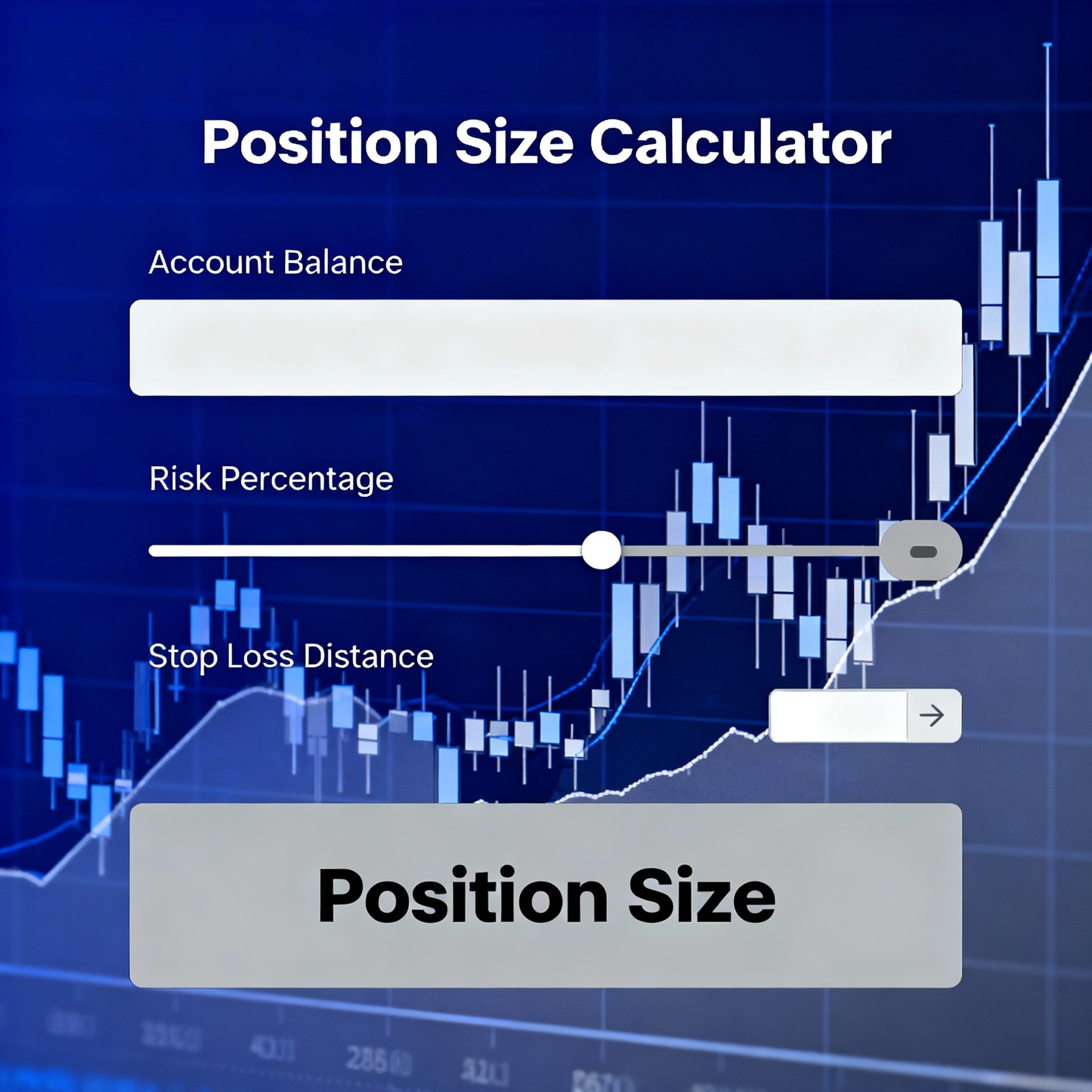
Position Size Calculator concept with trading charts and financial elements
Understanding Position Size and Its Importance
Position size refers to the specific quantity or size of a financial asset that a trader should buy or sell within their portfolio. It serves as the cornerstone of effective risk management, ensuring traders don’t overcommit capital to a single trade while maintaining optimal portfolio performance.
The primary objective of calculating position size is to strike the perfect balance between risk and reward. Without proper position sizing, even profitable trading strategies can lead to devastating losses that wipe out entire trading accounts.
Why Calculate Position Size Matters
Calculating position size properly offers several critical benefits for traders:
Capital Protection: Position size calculation prevents over-leveraging and ensures you never risk more than your predetermined risk tolerance on any single trade.
Consistency: By using systematic position size calculation methods, traders maintain discipline and avoid emotional decision-making that often leads to poor outcomes.
Risk Management: Proper position size calculation helps limit potential losses to manageable levels, typically 1-3% of total trading capital per trade.
Essential Components for Position Size Calculation
Before diving into position size calculation formulas, you must understand the key components required for accurate calculations:
Account Risk and Capital
Account risk represents the maximum percentage of your trading capital you’re willing to lose on a single trade. Most professional traders recommend risking no more than 1-2% of total capital per trade for conservative risk management.
For example, if your trading account has ₹1,00,000 and you decide to risk 2% per trade, your account risk would be ₹2,000. This means that even if you lose 10 consecutive trades, you’ll only lose 20% of your investment capital.
Trade Risk and Stop-Loss Levels
Trade risk refers to the difference between your entry price and stop-loss price per share or unit. This component is crucial for position size calculation as it determines how much you’ll lose per unit if the trade goes against you.
Setting appropriate stop-loss levels requires careful analysis of market volatility, support and resistance levels, and your trading strategy. The distance between entry and stop-loss directly impacts your position size calculation.
Position Size Calculation Formula
The fundamental formula for calculating position size is straightforward and universally applicable across all financial markets:
Position Size = Account Risk ÷ Trade Risk
Let’s break down this position size calculation formula with detailed components:
- Account Risk = Total Trading Capital × Risk Percentage per Trade
- Trade Risk = Entry Price – Stop Loss Price (for long positions)
- Position Size = Number of shares/units to trade
Step-by-Step Position Size Calculation Process
Follow these systematic steps to calculate position size for any trade:
Step 1: Determine Your Account Risk
Calculate your maximum risk per trade by multiplying your total trading capital by your chosen risk percentage. If you have ₹5,00,000 and risk 1.5% per trade, your account risk equals ₹7,500.
Step 2: Calculate Trade Risk Per Unit
Subtract your stop-loss price from your entry price (for long positions) or vice versa (for short positions). This gives you the risk per share or unit.
Step 3: Apply the Position Size Calculation Formula
Divide your account risk by trade risk per unit to determine the optimal position size for your trade.
Practical Position Size Calculation Examples
Example 1: Stock Trading Position Size Calculation
Let’s calculate position size for a stock trade with these parameters:
- Trading Capital: ₹2,00,000
- Risk per Trade: 2%
- Entry Price: ₹450
- Stop Loss: ₹420
Position Size Calculation:
- Account Risk = ₹2,00,000 × 2% = ₹4,000
- Trade Risk = ₹450 – ₹420 = ₹30 per share
- Position Size = ₹4,000 ÷ ₹30 = 133 shares
This position size calculation shows you should buy 133 shares to maintain your 2% risk level.
Example 2: Forex Position Size Calculation
For forex trading, position size calculation involves additional considerations like pip values and currency pairs:
- Account Balance: $10,000
- Risk Percentage: 1%
- Stop Loss Distance: 50 pips
- Pip Value: $10 per standard lot
Position Size Calculation:
Position Size = ($10,000 × 1%) ÷ (50 pips × $10) = $100 ÷ $500 = 0.2 standard lots
Advanced Position Size Calculation Methods
Fixed Dollar Risk Position Size Calculation
This method involves setting a fixed dollar amount you’re willing to risk per trade, regardless of trade size or market conditions. For instance, if you decide to risk ₹5,000 per trade, you adjust position size accordingly to maintain this constant risk level.
Percentage of Capital Position Size Calculation
The percentage method scales your position size calculation based on account growth or decline. As your account grows, position sizes increase proportionally, enabling compound growth while maintaining consistent risk levels.
Volatility-Based Position Size Calculation
This advanced approach adjusts position size calculation based on market volatility using indicators like Average True Range (ATR). More volatile assets require smaller position sizes to maintain equivalent risk levels.
ATR Position Size Formula:
Position Size = Account Risk ÷ (ATR × Multiple)
Kelly Criterion for Position Size Calculation
The Kelly Criterion provides mathematically optimal position size calculation based on win probability and reward-to-risk ratios:
Kelly % = Win Rate – [(1 – Win Rate) ÷ Reward/Risk Ratio]
Position Size Calculation Tools and Resources
Modern traders have access to numerous tools for position size calculation:
Online Position Size Calculators
Several platforms offer free position size calculation tools that automatically compute optimal trade sizes based on your inputs. These calculators eliminate manual calculation errors and save valuable time during trade execution.
Trading Platform Integration
Most professional trading platforms include built-in position size calculation features that automatically determine appropriate trade sizes based on predefined risk parameters.
Spreadsheet Templates
Custom Excel or Google Sheets templates can streamline position size calculation for traders who prefer manual control over their risk management parameters.
Common Position Size Calculation Mistakes
Overriding Calculated Position Sizes
Many traders calculate position size correctly but then override these calculations based on emotions or market conviction. This defeats the entire purpose of systematic risk management.
Ignoring Market Volatility
Failing to adjust position size calculation based on market volatility can lead to unexpected losses during high-volatility periods. Always consider market conditions when determining trade sizes.
Inconsistent Risk Management
Using different risk percentages for different trades without systematic reasoning undermines the effectiveness of position size calculation. Maintain consistency in your risk management approach.
Position Size Calculation for Different Asset Classes
Equity Position Size Calculation
Stock position size calculation typically involves straightforward share quantities based on price differences and account risk. Consider factors like dividend dates and earnings announcements that might affect volatility.
Options Position Size Calculation
Options position size calculation requires additional considerations including time decay, implied volatility, and leverage effects. Position sizes should account for the inherent leverage in options contracts.
Futures Position Size Calculation
Futures position size calculation must consider contract specifications, margin requirements, and daily settlement procedures. The high leverage in futures makes precise position size calculation even more critical.
Risk Management Beyond Position Size Calculation
Diversification Strategies
While position size calculation manages individual trade risk, portfolio diversification spreads risk across multiple assets, sectors, and strategies. Never concentrate more than 20-25% of your capital in any single sector.
Stop-Loss Management
Effective stop-loss placement complements position size calculation by defining exit points before losses exceed acceptable levels. Regularly review and adjust stop-losses based on market conditions.
Position Monitoring
Continuously monitor your positions and adjust position sizes if market conditions change significantly. Position size calculation isn’t a set-and-forget process.
Technology and Position Size Calculation
Algorithmic Trading Integration
Modern algorithmic trading systems automatically calculate position size based on predefined parameters, removing emotional decision-making from the process. These systems can process multiple position size calculations simultaneously across various markets.
Mobile Trading Applications
Most mobile trading apps now include position size calculation features, allowing traders to determine optimal trade sizes on-the-go. This accessibility ensures consistent risk management regardless of trading location.
Advanced Risk Metrics for Position Size Calculation
Value at Risk (VaR) Integration
Sophisticated traders incorporate Value at Risk calculations into their position size determination process, providing statistical measures of potential losses over specific time periods.
Sharpe Ratio Optimization
Position size calculation can be optimized using Sharpe ratios to maximize risk-adjusted returns across portfolio positions. This approach considers both return potential and volatility in determining optimal position sizes.
Position Size Calculation Best Practices
Regular Strategy Review
Periodically review your position size calculation methodology to ensure it remains aligned with your trading objectives and risk tolerance. Market conditions and personal circumstances may warrant adjustments to your approach.
Documentation and Analysis
Maintain detailed records of your position size calculations and their outcomes. This documentation helps identify patterns and improve your risk management over time.
Continuous Education
Stay updated on new position size calculation methods and risk management techniques. The financial markets evolve continuously, and your risk management approach should evolve accordingly.
Keywords: position size calculation, calculate position size, position sizing, risk management, trading position size, position size formula, stock position size, forex position size, trading risk management, position size calculator
Hashtags: #PositionSizeCalculation #TradingRiskManagement #PositionSizing #StockTrading #ForexTrading #RiskManagement #TradingStrategy #PositionSizeCalculator #TradingEducation #InvestmentStrategy
Disclaimer
This article is provided for educational purposes only and should not be considered as financial advice. Trading in financial markets involves substantial risk and may not be suitable for all investors. Past performance does not guarantee future results. Always consult with a qualified financial advisor before making investment decisions. The information presented here is based on general market principles and may not apply to your specific situation. Risk management strategies, including position size calculation, cannot eliminate the risk of loss. Please trade responsibly and only with capital you can afford to lose.