
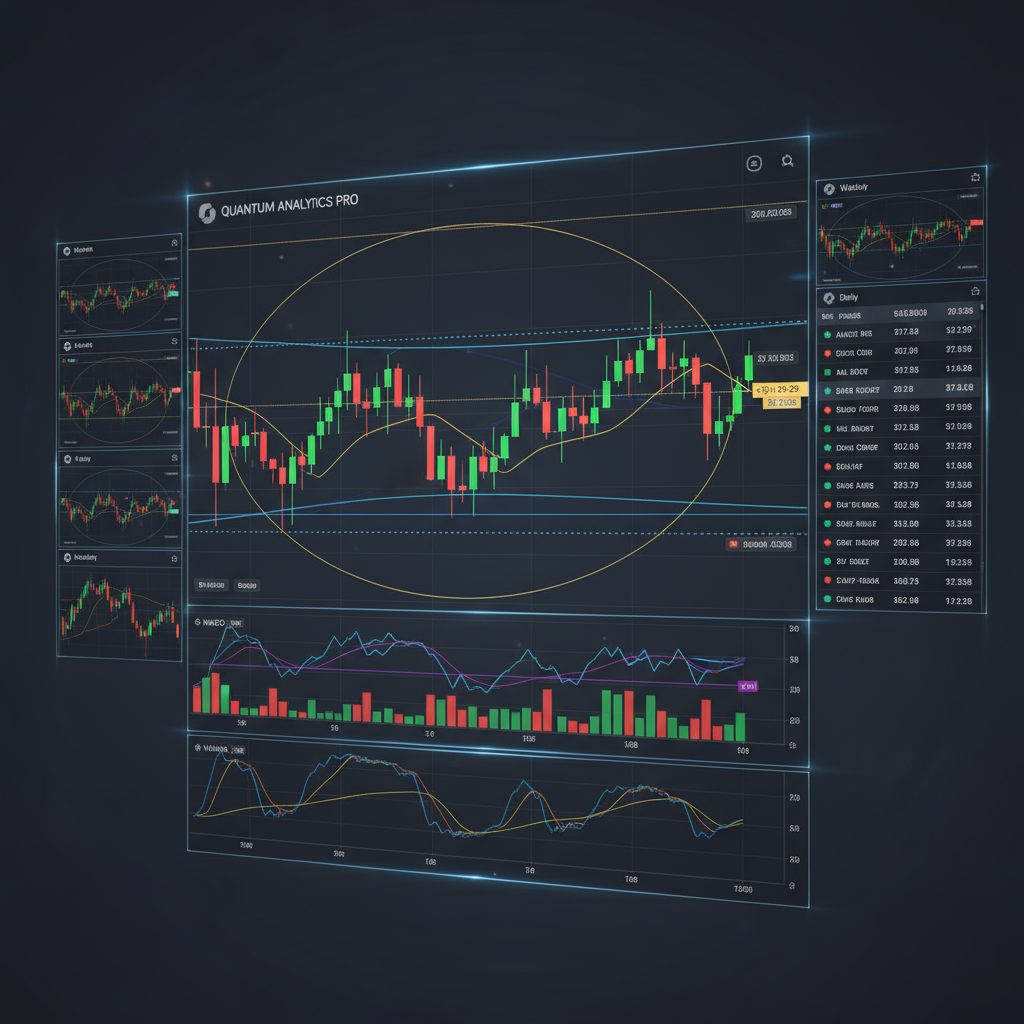
Professional swing trading indicators form the analytical backbone that separates successful traders from those who rely on guesswork and emotion. These sophisticated technical tools provide quantitative insights into market momentum, trend direction, volatility patterns, and optimal entry-exit timing that swing trading indicators deliver when properly understood and applied systematically.
The most effective swing trading indicators combine multiple analytical perspectives, creating comprehensive market assessment frameworks that account for price action, volume dynamics, momentum oscillations, and trend confirmation. Expert traders understand that individual swing trading indicators rarely provide sufficient information for high-probability trading decisions, requiring sophisticated combinations that enhance signal reliability while minimizing false breakouts.
Moving Averages: The Foundation of Swing Trading Indicators
Moving averages represent the most fundamental and widely utilized swing trading indicators, providing trend identification and dynamic support-resistance levels that professional traders rely upon for directional bias. The most effective moving average systems combine multiple timeframes, typically employing the 20-day Exponential Moving Average (EMA) for short-term momentum and the 50-day Simple Moving Average (SMA) for intermediate trend confirmation.
Professional implementation of moving average swing trading indicators involves analyzing price position relative to these dynamic levels, with prices above indicating bullish bias and prices below suggesting bearish momentum. The most reliable signals occur when shorter-period moving averages cross above or below longer-period averages, confirming trend changes that swing trading indicators specialists monitor continuously.
Advanced moving average strategies within swing trading indicators frameworks include utilizing the 200-day SMA as the primary trend filter, taking long positions only when securities trade above this level and short positions when prices remain below. This approach ensures alignment with institutional money flows and reduces the probability of counter-trend trades that typically result in losses for retail participants.
The slope of moving averages provides additional confirmation within swing trading indicators analysis, with rising slopes indicating strengthening trends and flattening slopes suggesting potential trend exhaustion. Expert traders monitor moving average convergence and divergence patterns, using these relationships to anticipate trend continuation or reversal scenarios that swing trading indicators reveal through systematic observation.
Relative Strength Index: Momentum Mastery in Swing Trading Indicators
The Relative Strength Index (RSI) stands among the most valuable swing trading indicators for identifying overbought and oversold conditions that often precede significant price reversals. This momentum oscillator ranges from 0 to 100, with readings above 70 typically indicating overbought conditions and readings below 30 suggesting oversold scenarios where contrarian opportunities may emerge.
Professional traders utilizing RSI within their swing trading indicators arsenal look beyond simple overbought-oversold levels, focusing instead on divergence patterns that provide early warning signals of potential trend changes. Bullish divergence occurs when price makes lower lows while RSI creates higher lows, indicating weakening selling pressure that swing trading indicators specialists interpret as potential reversal signals.
The most effective RSI applications within swing trading indicators strategies involve combining traditional level analysis with trend line techniques applied directly to the oscillator. When RSI breaks above or below significant trend lines, it often precedes similar movements in price action, providing advance warning that swing trading indicators practitioners use to position themselves advantageously.
Expert traders also employ RSI failure swings as high-probability swing trading indicators setups, watching for situations where RSI fails to reach extreme levels during price moves in the prevailing trend direction. These failure patterns often indicate trend exhaustion and impending reversals that sophisticated swing trading indicators analysis can identify before they become obvious in price action.
MACD: Trend and Momentum Convergence
The Moving Average Convergence Divergence (MACD) represents one of the most comprehensive swing trading indicators available, combining trend-following and momentum oscillator characteristics in a single analytical tool. MACD consists of the MACD line (difference between 12-day and 26-day EMAs), signal line (9-day EMA of MACD line), and histogram (difference between MACD and signal lines).
Professional swing trading indicators analysis using MACD focuses on signal line crossovers, histogram patterns, and centerline relationships that provide multiple layers of market information. Bullish signals occur when MACD crosses above the signal line, particularly when this crossover happens below the centerline, indicating momentum shifts from bearish to bullish territory.
Advanced MACD techniques within swing trading indicators frameworks include histogram analysis, where expanding histograms confirm trend acceleration and contracting histograms suggest momentum deceleration. Expert traders monitor histogram peaks and troughs, using these patterns to anticipate MACD line crossovers before they occur, gaining early entry advantages that swing trading indicators sophistication provides.
The most reliable MACD signals within swing trading indicators systems occur when multiple confirmations align simultaneously—signal line crossovers, centerline crosses, and histogram expansions all supporting the same directional bias. This multi-factor approach reduces false signals while maintaining sensitivity to genuine trend changes that swing trading indicators are designed to identify.
Bollinger Bands: Volatility-Based Price Boundaries
Bollinger Bands constitute essential swing trading indicators that adapt to changing market volatility, consisting of a middle band (20-day SMA) and upper/lower bands set two standard deviations away from the center line. These dynamic boundaries expand during high volatility periods and contract during quiet market phases, providing context-sensitive support and resistance levels.
Professional traders employ Bollinger Bands as swing trading indicators primarily for mean reversion strategies, buying near the lower band during uptrends and selling near the upper band during downtrends. The most effective applications require trend confirmation from additional indicators, ensuring that mean reversion trades align with prevailing market direction rather than fighting against strong momentum.
Bollinger Band squeeze patterns represent some of the most powerful swing trading indicators setups available, occurring when bands contract to narrow ranges that precede explosive price movements. Expert traders monitor these compression phases, preparing for significant volatility expansions that often result in trend breakouts or breakdowns worth substantial profits.
The relationship between price action and Bollinger Bands provides crucial insights within swing trading indicators analysis, with price touches at band extremes indicating potential reversal zones while sustained moves beyond bands suggest exceptional strength or weakness. Professional traders use band penetration patterns to gauge momentum sustainability and adjust position sizing accordingly.
Volume Indicators: Confirming Price Action
Volume analysis forms a critical component of comprehensive swing trading indicators strategies, with several specialized tools providing insights into buying and selling pressure behind price movements. On-Balance Volume (OBV) represents the most straightforward volume-based indicator, adding volume to a cumulative total when prices close higher and subtracting volume when prices close lower.
Professional swing trading indicators practitioners use OBV to confirm price trends and identify potential divergences that warn of upcoming reversals. When prices make new highs but OBV fails to confirm with new highs, it suggests weakening buying pressure that often precedes significant corrections or trend changes.
Volume Rate of Change (VROC) provides another valuable tool within swing trading indicators arsenals, measuring the pace of volume expansion or contraction over specified periods. Surging VROC readings often coincide with breakout movements, while declining VROC suggests momentum fading that may precede trend exhaustion.
The Accumulation/Distribution Line combines price and volume analysis within sophisticated swing trading indicators frameworks, tracking the relationship between closing prices and trading ranges while weighting by volume. This indicator helps identify institutional accumulation or distribution patterns that retail traders can follow for improved positioning.
Stochastic Oscillator: Fine-Tuning Entry Timing
The Stochastic Oscillator provides precise entry timing within swing trading indicators systems, comparing current closing prices to recent trading ranges over specified lookback periods. This momentum indicator ranges from 0 to 100, with readings above 80 indicating overbought conditions and readings below 20 suggesting oversold scenarios.
Professional traders utilize Stochastic crossovers as swing trading indicators signals, entering positions when %K line crosses above or below %D line while confirming directional bias through trend analysis. The most reliable signals occur when crossovers happen in extreme zones (above 80 or below 20) and align with broader trend direction.
Stochastic divergence patterns represent advanced swing trading indicators techniques that identify momentum shifts before they become apparent in price action. When price makes new extremes but Stochastic fails to confirm, it often signals impending reversals that sophisticated traders can anticipate and trade profitably.
Expert practitioners combine Stochastic analysis with support/resistance levels, using oscillator readings to time entries near technically significant price zones. This integration of swing trading indicators creates high-probability setups where technical and momentum factors converge to support trading decisions.
Williams %R: The Hidden Gem of Swing Trading Indicators
Williams %R represents one of the most underutilized yet effective swing trading indicators available, measuring the relationship between current closing prices and high-low ranges over specified periods. This oscillator ranges from 0 to -100, with readings above -20 indicating overbought conditions and readings below -80 suggesting oversold scenarios.
Recent research identifies Williams %R as potentially the most effective single swing trading indicators tool available, demonstrating superior risk-adjusted returns compared to more popular alternatives like RSI or Stochastic. Its effectiveness stems from reduced noise characteristics and more accurate extreme level identification compared to traditional momentum oscillators.
Professional implementation of Williams %R within swing trading indicators frameworks involves using -20 and -80 levels as primary signals, entering contrarian positions when readings reach these extremes while confirming directional bias through trend analysis. The indicator’s sensitivity provides early warning signals that often precede similar indications from slower momentum tools.
Advanced Williams %R techniques include failure swing analysis, where readings fail to reach extreme levels during expected market moves, suggesting trend weakness that swing trading indicators specialists interpret as reversal signals. These subtle patterns require experience to identify but offer exceptional risk-reward opportunities for skilled practitioners.
Multi-Timeframe Integration of Swing Trading Indicators
Professional swing trading indicators analysis requires multi-timeframe perspective that combines longer-term trend identification with shorter-term entry timing precision. The most effective approach involves using daily charts for primary trend analysis, four-hour charts for setup development, and hourly charts for entry confirmation and fine-tuning.
Weekly timeframes provide essential context for swing trading indicators analysis, helping identify major support/resistance levels and primary trend direction that should govern shorter-term trading decisions. Expert traders ensure that their swing positions align with weekly chart momentum to avoid fighting against institutional money flows.
The integration of swing trading indicators across multiple timeframes follows systematic hierarchical analysis, beginning with longer timeframes for directional bias and progressively focusing on shorter timeframes for execution timing. This approach prevents analysis paralysis while maintaining comprehensive market perspective that successful trading requires.
Professional traders develop specific swing trading indicators combinations for each timeframe, using slower indicators like 50-day moving averages on daily charts while employing faster oscillators like 14-period RSI on hourly charts for entry timing. This tailored approach optimizes indicator effectiveness across different analytical purposes.
Risk Management Integration with Swing Trading Indicators
Effective swing trading indicators application extends beyond signal generation to include comprehensive risk management integration that protects capital while maximizing profit potential. Professional traders use indicator readings to adjust position sizing, with stronger signals justifying larger positions and weaker signals requiring more conservative sizing.
Stop-loss placement benefits significantly from swing trading indicators analysis, using technical levels identified through moving averages, Bollinger Bands, or momentum oscillator support/resistance rather than arbitrary percentage-based stops. This approach aligns protective orders with market structure and technical logic.
Profit target determination integrates swing trading indicators analysis through measured move calculations, Fibonacci extensions, and momentum sustainability assessment. Expert traders avoid premature profit-taking by monitoring indicator strength and trend continuation signals that suggest extended moves remain likely.
The most sophisticated swing trading indicators applications include dynamic risk adjustment based on market volatility conditions measured through Average True Range (ATR) and Bollinger Band width. This adaptive approach maintains consistent risk exposure regardless of changing market conditions while optimizing profit potential.
Advanced Chart Pattern Recognition
Swing trading indicators effectiveness increases substantially when combined with traditional chart pattern analysis that identifies consolidation phases, trend continuations, and reversal formations. Professional traders use indicator confirmation to validate pattern breakouts and avoid false signals that plague standalone pattern trading.
Triangle patterns, flag formations, and rectangle consolidations provide structured setups that swing trading indicators can confirm through momentum analysis and volume validation. The most reliable pattern trades occur when multiple indicators align to support breakout direction and sustainability expectations.
Head and shoulders patterns, double tops/bottoms, and other reversal formations benefit from swing trading indicators confirmation through momentum divergences and trend strength analysis. Expert traders require indicator confirmation before acting on pattern signals, significantly improving success rates and risk-reward ratios.
Cup and handle patterns represent particularly effective combinations with swing trading indicators, where volume analysis and momentum confirmation provide early entry opportunities as patterns complete. This integration creates high-probability setups with clearly defined risk parameters and substantial profit potential.
Technology and Automation Enhancement
Modern swing trading indicators benefit substantially from technological enhancement through automated screening, alert systems, and systematic backtesting capabilities that improve efficiency and consistency. Professional traders utilize advanced charting platforms that integrate multiple indicator analysis with customizable alert systems.
Automated screening tools identify securities meeting specific swing trading indicators criteria across broad market universes, allowing traders to focus analytical attention on highest-probability opportunities rather than manual chart scanning. These systems monitor thousands of securities continuously for predefined indicator combinations.
Backtesting capabilities enable systematic validation of swing trading indicators combinations using historical data, providing objective performance metrics that guide strategy development and refinement. Expert traders require statistical validation before implementing new indicator approaches with real capital.
Algorithm-assisted swing trading indicators analysis helps identify subtle patterns and relationships that manual analysis might miss, while maintaining human oversight for discretionary decision-making and market context evaluation. This hybrid approach combines technological efficiency with human insight and adaptability.
Disclaimer
This article is intended for educational purposes only and does not constitute investment advice, stock recommendations, or trade calls by Trading Strategys. The swing trading indicators and technical analysis techniques mentioned are purely for illustration and are not recommendatory.
Investments in securities markets are subject to market risks, and past performance does not guarantee future results. Swing trading involves substantial risk of loss and is not suitable for all investors. Please read all related documents carefully before investing and consider consulting with a qualified financial advisor. Trading Strategys and its authors are not responsible for any financial losses incurred from implementing the indicator strategies discussed in this article.
Technical indicators are tools that help analyze market trends but do not guarantee trading success. Markets can be volatile and unpredictable, and traders should never risk more capital than they can afford to lose. Always practice proper risk management and combine indicators with fundamental analysis for comprehensive market evaluation.
Keywords: swing trading indicators, technical analysis, RSI, MACD, moving averages, Bollinger Bands, Williams %R, Stochastic oscillator, volume indicators, chart patterns
Hashtags: #SwingTradingIndicators #TechnicalAnalysis #RSI #MACD #MovingAverages #BollingerBands #TradingIndicators #ChartAnalysis #MarketTiming #TradingStrategy